

Market Insights
AI Data Center Construction Equipment: A Complete Guide for 2026

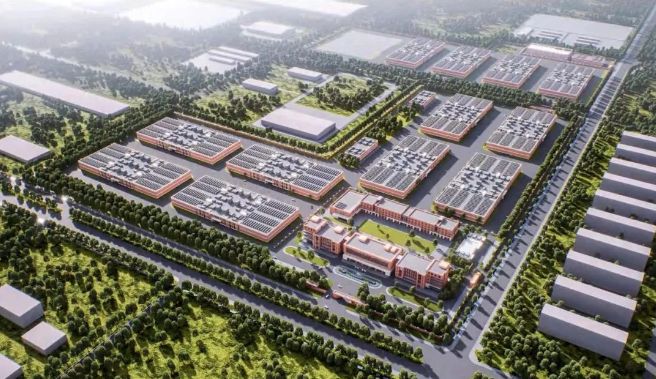
Global spending on AI data center construction is growing at over 30% per year. Google, Microsoft, and Amazon are racing to build new facilities across the Middle East, Southeast Asia, and beyond. A single hyperscale data center can cost $1-3 billion to build, with roughly 15-20% of that going to site preparation and civil works.
For the Gulf region, the numbers are especially striking. Saudi Arabia’s NEOM alone is driving massive demand for earthmoving and compaction equipment. The UAE is pouring investment into AI infrastructure — Abu Dhabi’s Masdar City and Dubai’s AI campus are both actively expanding. Qatar and Oman are following suit, each pushing their own digital transformation agendas.
According to a March 2026 report from Research and Markets, the GCC construction machinery market is projected to grow from USD 6.91 billion in 2025 to USD 9.62 billion by 2031 — a compound annual growth rate of 5.68%. And a big chunk of that growth is coming from data center construction.
These buildings require massive earthmoving, precise compaction, and efficient material handling. Which means heavy equipment is in high demand.
I’ve been selling construction equipment into Middle Eastern markets for over 20 years. Here’s what I’ve learned about the machines you actually need for data center work, and which ones give you the best value.
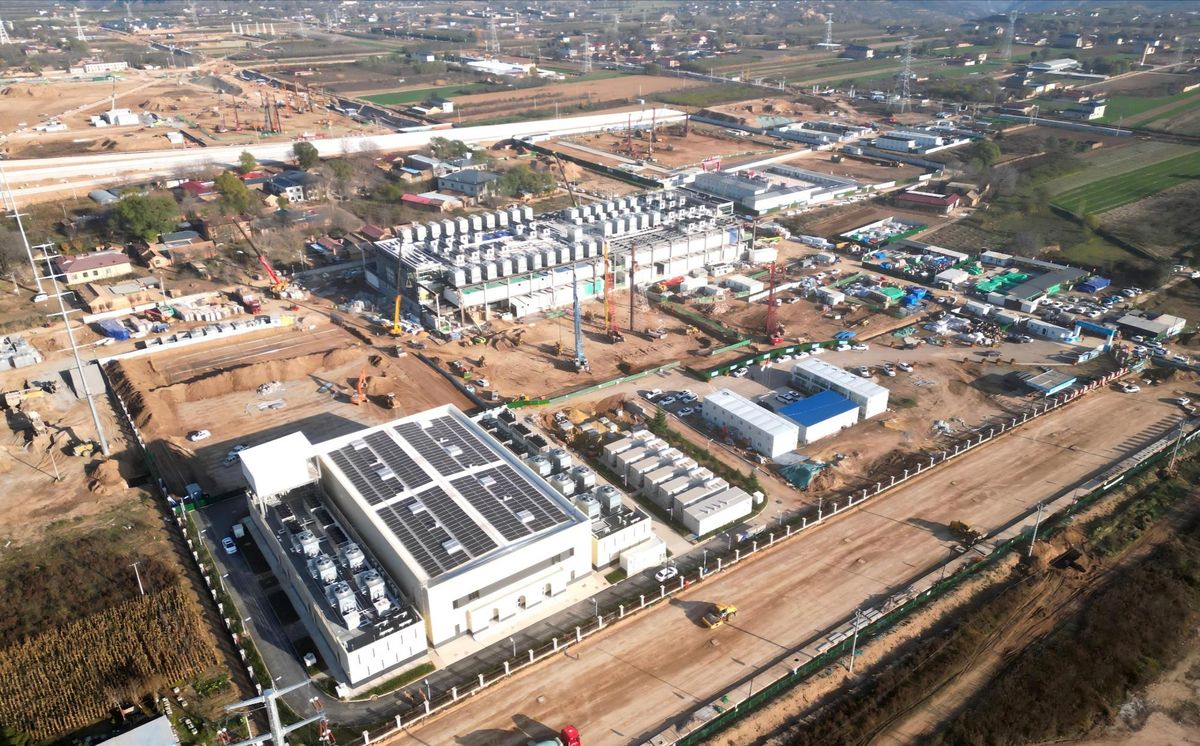
Phase 1: Site Preparation
Before a single server rack goes in, the ground has to be right. Data centers need foundation pads that are flat, stable, and properly compacted. We’re talking 10,000 to 50,000 square meters for a mid-size facility.
For this phase, most contractors I work with in the Gulf go with the following setup:
| Machine | Recommended Spec | What It Does |
|---|---|---|
| Excavator | 20-30 ton class | Foundation excavation, utility trenching |
| Bulldozer | 200-300 HP | Rough grading, site leveling |
| Wheel Loader | 3-5 ton class | Backfilling, moving excavated material |
| Dump Truck | 20-40 ton capacity | Hauling away excavated earth |
A 22-ton excavator paired with a 3.5-ton wheel loader handles most mid-size data center projects without issue. Chinese mid-range equipment from manufacturers like Jingong (晋工) delivers about 85-90% of the performance you’d get from a Komatsu or Hitachi, at roughly 60-70% of the price. For a project with a defined timeline, that math works well.
Phase 2: Foundation and Compaction
This is where most data center construction projects run into trouble.
Data center floors have to support enormous weight. A single row of fully-loaded server racks can exceed 50 tons. UPS systems and backup generators add even more. If the ground settles unevenly under that load, you get cracked floors. Cracked floors mean expensive repairs — and in a data center, repairs often mean downtime.
Good compaction is the difference between a foundation that lasts and a costly mistake.

| Machine | Spec | Application |
|---|---|---|
| Vibratory Roller | 18-22 ton class | Deep soil compaction for main foundation |
| Static Roller | 20-25 ton class | Final surface finishing pass |
| Padfoot Roller | 5-10 ton class | Compaction near foundations and edges |
| Plate Compactor | — | Trench and edge work |
For most data center foundations, look for a vibratory roller with at least 280-350 kN of centrifugal force and a frequency range of 25-35 Hz. A drum width of 2.1 meters or wider covers more ground per pass.
Our compaction equipment comes from Luoyang Lutong (洛阳路通), one of China’s established roller manufacturers. Their mid-range vibratory rollers deliver compaction performance that competes with European brands like Bomag and Dynapac. The cost advantage is roughly 30-40%.
That said, I’m honest with customers about this: if you need a machine that will work for a decade across multiple projects, a premium brand might be worth the investment. If you’re buying for a single data center build, the Chinese roller will finish the job and save you significant upfront capital.
Phase 3: Material Handling
Once construction picks up speed, materials move constantly. Concrete, steel reinforcement, cooling pipes, electrical conduits. Later, the actual server equipment arrives.
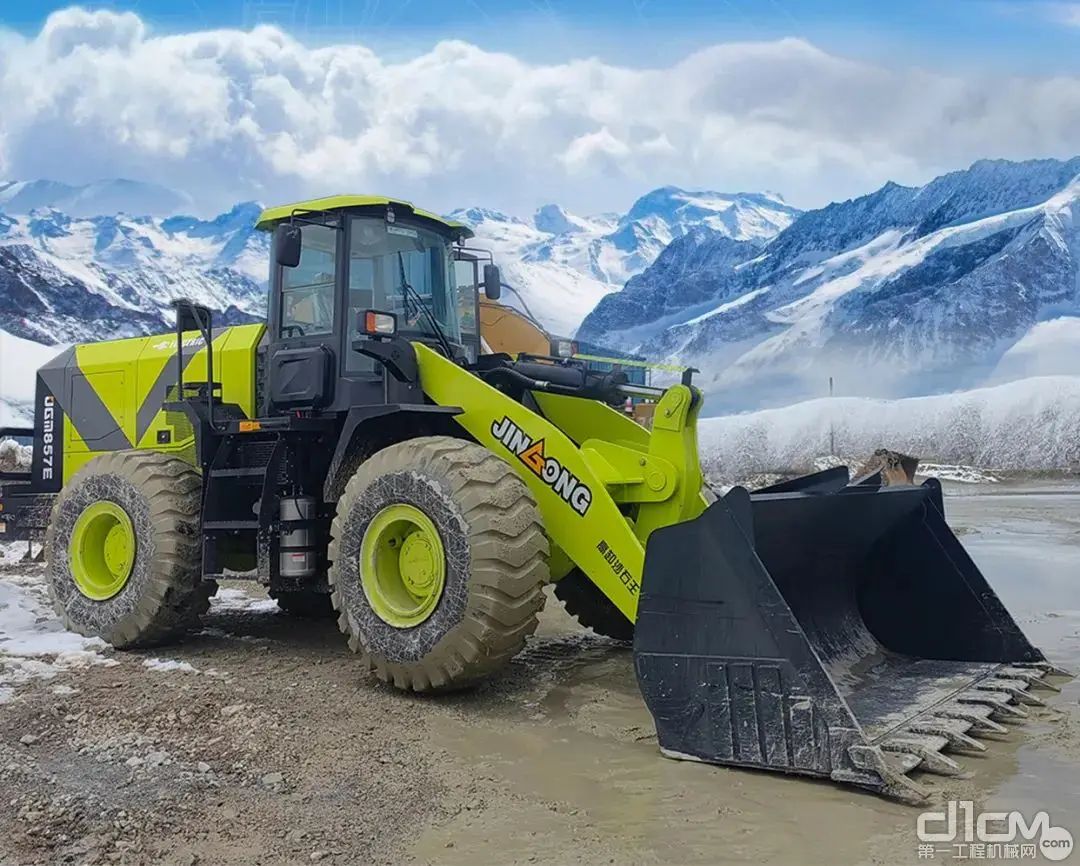
A 3-5 ton wheel loader is the most versatile machine on site. It’s not the most exciting piece of equipment, but it’s the one you’ll use every day. Data center construction sites are tighter than highway projects or mines, so the smaller footprint makes a real difference. A 3.5-ton loader can fit into foundation trenches that a larger machine can’t reach.
For the later installation phase, you’ll also need a rough terrain forklift (5-10 ton) for moving UPS units and generators, plus a telescopic forklift if overhead cooling installation is required.
Chinese vs Premium Brands
This comes up in every conversation I have with contractors in Saudi Arabia, the UAE, and Southeast Asia. Should you buy Caterpillar or Komatsu, or go with a Chinese alternative?

| Factor | Premium (CAT, Komatsu) | Chinese Mid-Range (Jingong, Lutong) |
|---|---|---|
| Upfront cost | Highest | 40-50% less |
| Reliability | Excellent | Good — most machines complete the job |
| Parts in MENA | Widely available | Improving — keep spares on hand |
| Warranty | Local dealer network | Direct factory support |
| Fuel efficiency | Excellent | Good |
| Resale value | High | Lower, but you paid less upfront |
For a single data center build with a defined 12-24 month timeline, the Chinese option makes strong financial sense. The savings on 4-5 machines can cover spare parts, extra attachments, and a service contingency.

Budget Guide
If you’re planning a 10-30 MW data center project, here’s a rough budget for a Chinese mid-range equipment fleet:
| Machine | Quantity | Estimated Budget |
|---|---|---|
| 22-ton Excavator | 2-3 | $120,000-180,000 |
| 18-ton Vibratory Roller | 1-2 | $80,000-120,000 |
| 3.5-ton Wheel Loader | 2-3 | $60,000-90,000 |
| 5-ton Forklift | 1-2 | $30,000-50,000 |
| Total | $290,000-440,000 |
Prices are FOB estimates based on current Chinese export market rates. Final pricing depends on configuration, certifications, and delivery terms.
FAQ
Q: What size excavator is best for data center foundation work?
A: A 20-30 ton excavator handles most data center excavation needs. For mid-size facilities (10-30 MW), a 22-ton machine offers a good balance of power and maneuverability.
Q: Is Chinese construction equipment reliable enough for data center projects?
A: Yes, with proper maintenance. Chinese mid-range equipment from established manufacturers like Jingong and Luoyang Lutong can complete a full data center build cycle. The key is keeping basic spares on hand and following the maintenance schedule.
Q: Why is compaction so important for data centers?
A: Data center floors support extremely heavy loads — server racks, UPS units, generators. Poor compaction leads to differential settlement and cracked floors. Repair costs in a data center are significantly higher than in standard buildings because of downtime and equipment sensitivity.
Q: What’s the typical timeline for equipping a data center build?
A: Lead times for Chinese equipment range from 30-60 days from order (FOB Chinese port). Budget extra time for shipping, customs clearance, and delivery to site in the Middle East — typically 60-90 days total.
Q: Can I mix Chinese and premium brand equipment on the same project?
A: Absolutely. Many contractors use Chinese machines for earthmoving and compaction (where specs are well-defined) and premium brands for critical-path or high-utilization equipment. This approach balances cost and reliability.
About CHINA
We’ve been supplying mid-range construction equipment to Middle Eastern and Southeast Asian markets since 2001. We work directly with Jingong (晋工), Luoyang Lutong (洛阳路通), and Jiahe Heavy Industry (嘉禾重工) — which means we skip the middlemen.
If you’re planning a data center project and want equipment recommendations, get in touch.
Email: sales@cmpartscn.com
WhatsApp: +86 138-2648-6537
Website: cmpartscn.com