

Market Insights
Excavator Tooth Material Analysis and Wear Solutions 2026

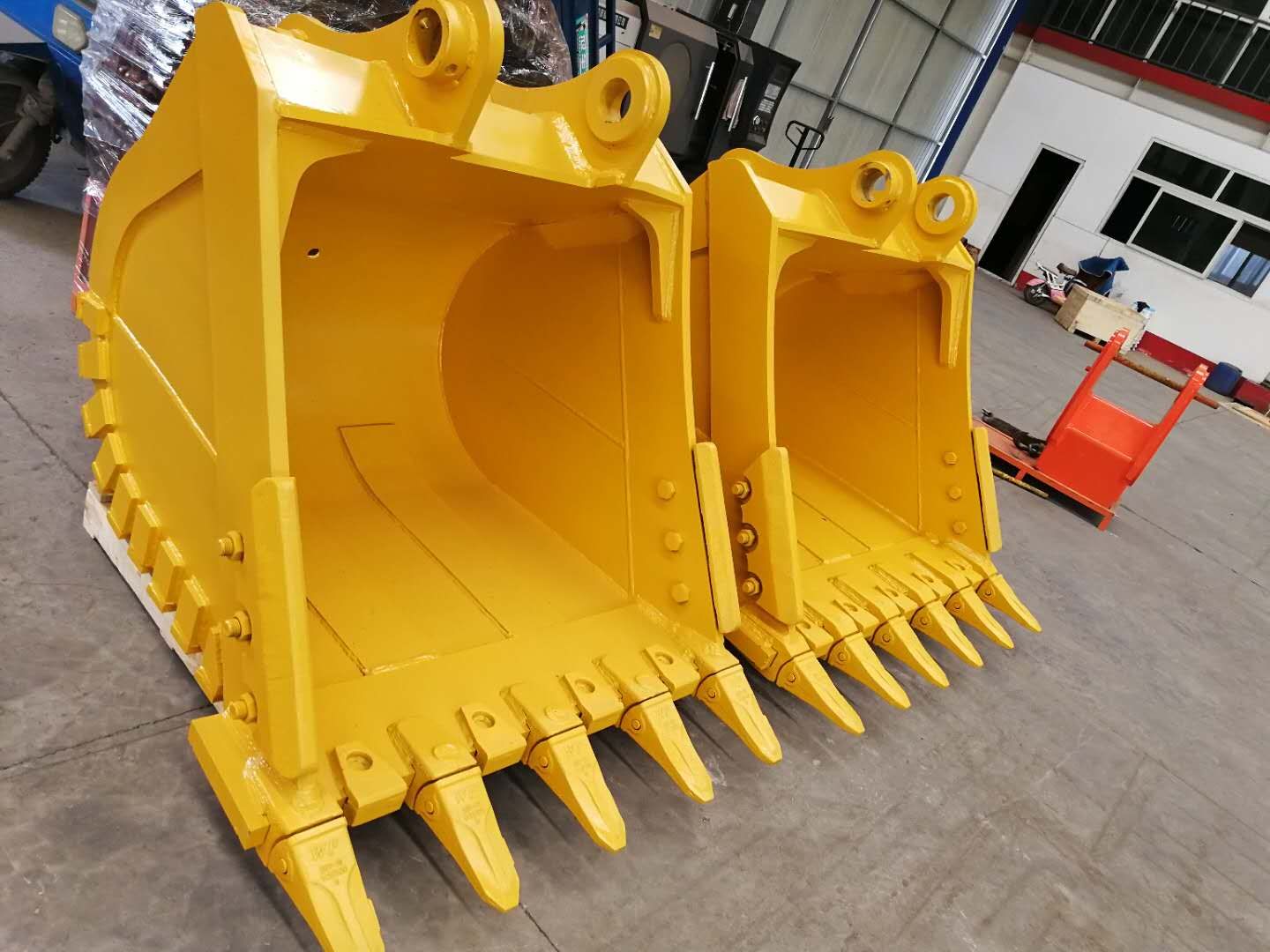
Excavator Tooth Material Analysis and Wear Solutions 2026
A CAT 6020B mining excavator loses a tooth every 400 hours in hard granite. One replacement cycle costs $3,000+ in lost production. But the failure isn’t random — it begins at the grain boundaries of the steel, 48 hours before the tooth finally snaps. Understanding excavator tooth material behavior is the difference between predictable wear and catastrophic failure.
Most mining operations treat tooth replacement as a consumable cost. But when you dig into the metallurgy, the savings are significant: the right excavator tooth material for your specific site conditions can extend service life by 40-60% compared to a generic option.
This article breaks down three common tooth materials at the microstructural level — 40CrMnMo low-alloy steel, ZGMn13 high manganese steel, and Hardox-grade wear plate — and shows you exactly where each one wins and where it fails in large-scale mining applications.
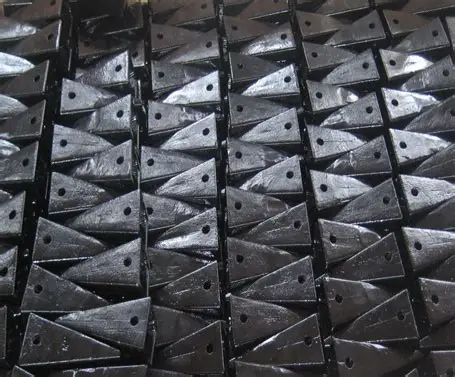
Excavator Tooth Material Analysis — Three Material Types Compared
Every excavator tooth on the market falls into one of three material families. The chemistry and heat treatment determine how the tooth behaves under abrasion, impact, and cyclic loading — the three killers in mining.
40CrMnMo Low-Alloy Wear-Resistant Steel
40CrMnMo is the workhorse of the excavator tooth industry. It contains chromium (Cr), manganese (Mn), and molybdenum (Mo) in precise ratios — typically 0.38-0.45% C, 0.9-1.2% Cr, 0.9-1.2% Mn, 0.15-0.25% Mo. The alloy is quenched and tempered to a tempered martensite structure. This gives it a uniform hardness of HRC 45-55 throughout the cross-section.
Why it works: The tempered martensite structure provides an excellent balance of hardness and toughness. In abrasive wear (the dominant failure mode in granite and quartzite mining), the hardness resists particle penetration. The toughness prevents crack propagation from impact loads. For most mining conditions — mixed soil, limestone, weathered rock — 40CrMnMo delivers the best cost-per-hour ratio.
Where it falls short: Under extreme repeated impact (primary crusher feed, boulder breaking), the hardness becomes a liability. The material lacks the work-hardening capacity of high manganese steel and may exhibit micro-cracking at the cutting edge after prolonged high-impact cycles.
ZGMn13 High Manganese Steel
High manganese steel (ZGMn13, A128 Grade B) is the classic material for severe-impact applications. Its defining characteristic is work hardening — under repeated impact, the surface layer transforms from an initial hardness of HB 180-220 to HV 450+ (equivalent to roughly HRC 45-47 in the surface layer).
Why it works: The austenitic microstructure has exceptional toughness (ASTM impact values of 100+ J/cm² at room temperature). In primary crushing applications or very large mining excavators (100+ ton class) where boulders repeatedly strike the tooth face, the material absorbs the impact and then hardens in response. The core stays tough while the surface becomes wear-resistant.
Where it falls short: High manganese steel requires high impact to work-harden. In mixed soil or moderately abrasive conditions without sufficient impact energy, the surface never hardens properly — and the tooth wears faster than a 40CrMnMo equivalent. It’s also difficult to machine and weld, making field repairs impractical. Price is typically 15-25% higher than 40CrMnMo.This is why you see high manganese teeth in giant mining buckets (where impact is guaranteed) but not in medium-class excavators working mixed conditions.
Hardox 400/450 Equivalent Wear Plate (Side Wear Plates)
For bucket side wear plates, the material choice is simpler — quenched and tempered wear plate steel in the HB 400-450 hardness range (Hardox 400/450 equivalent). These are through-hardened bainitic-martensitic steels with a nominal composition of 0.15-0.20% C, 1.0-1.5% Mn with micro-alloying elements (B, Ti).
Why it works: Side wear plates face sliding abrasion, not high impact. The through-hardened structure gives uniform wear resistance across the entire plate thickness. CNC cutting ensures dimensional accuracy for bolt-on replacement. Hardox 400 equivalent at HB 400-450 is the industry standard choice — hard enough to resist abrasion from soil and rock, tough enough to handle occasional rock impacts against the bucket side.
Where it falls short: Not suitable for direct tooth applications. Limited impact toughness compared to cast 40CrMnMo or ZGMn13. In extreme conditions with continuous rock impact, HB 500+ grades (Hardox 500/550) may be needed — but these are more brittle and prone to fracture in side-edge applications.
Excavator Tooth Material Analysis — Wear Mechanisms at the Microstructural Level
To understand excavator tooth material wear, you need to zoom in to the microstructure — because that’s where the battle between tooth steel and rock is really fought.
Abrasive Wear — The Silent Killer
In granite and quartzite mining (quartz hardness: HV 1000-1200), the rock particles act as microscopic cutting tools. They plow through the steel matrix, removing material particle by particle. The wear rate is inversely proportional to the steel’s hardness — a tooth at HRC 45 wears approximately 40% faster than one at HRC 52 under pure abrasion.
But there’s a crucial trade-off: increasing hardness above HRC 55 in 40CrMnMo reduces Charpy impact toughness below 20 J/cm². At that point, the tooth becomes vulnerable to chipping and micro-fracture — which accelerates wear faster than the hardness gain can compensate. The “sweet spot” for most mining conditions is HRC 48-52.
Impact Chiseling — When Rocks Strike the Tooth Face
When a rock corner impacts the tooth face with high kinetic energy, the steel undergoes localized plastic deformation. In high manganese steel, this deformation triggers work hardening — the surface layer transforms from austenite to deformation-induced martensite, increasing local hardness by 200-300%.
In 40CrMnMo, the tempered martensite structure cannot work-harden further. The impact energy is absorbed through elastic deformation and, if the stress exceeds the yield point, through micro-crack formation at carbide-matrix interfaces. This is why 40CrMnMo teeth in high-impact applications eventually develop surface cracks — not from material defect, but from cyclic impact fatigue at the leading edge.
Fatigue Spalling — The Hidden Failure Mode
Cyclic loading from repeated bucket penetration causes subsurface fatigue cracks to initiate at non-metallic inclusions (sulfides, oxides) within the steel. These cracks propagate parallel to the surface, eventually causing thin layers of material to detach — a phenomenon known as spalling. The spalled surface accelerates further wear because the protective smooth surface is replaced by a rough, crack-containing surface layer.
This is where steel cleanliness and manufacturing quality matter. A tooth from a foundry that uses vacuum degassing and clean steel practices will have 50-70% fewer non-metallic inclusions than one from a low-cost caster — and correspondingly 3-5x longer resistance to spalling.
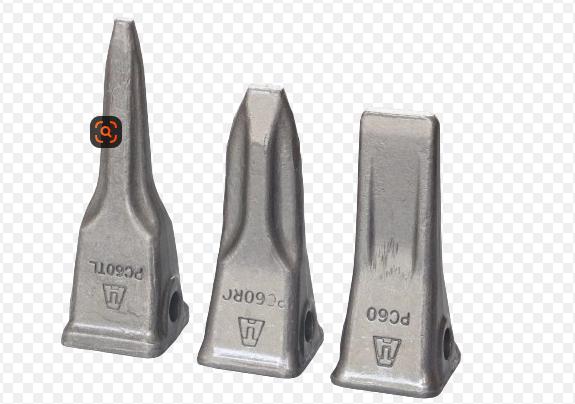
Material Properties — What the Numbers Really Mean
Here’s how the three material families compare across the metrics that determine field performance:
| Property | 40CrMnMo (Quench+Temper) | ZGMn13 (High Mn) | Hardox 400 eq. |
|---|---|---|---|
| Hardness (initial) | HRC 48-55 (uniform) | HB 180-220 (surface: HV 450+ after hardening) | HB 400-450 (uniform) |
| Impact toughness | 30-50 J/cm² | 100+ J/cm² | 15-25 J/cm² |
| Work hardening ability | Low — no significant hardening | Very high — surface can 2-3x | Minimal |
| Crack propagation resistance | High — tempered martensite arrests micro-cracks | Very high — austenite absorbs crack energy | Moderate — bainitic structure |
| Abrasion resistance (relative) | ★★★★ (best all-round) | ★★ (poor without impact) | ★★★★ (plates only) |
| Impact resistance | ★★★ | ★★★★★ | ★★ |
| Best mining application | Granite, mixed aggregates, limestone | Primary crushing, very large buckets, boulder extraction | Side wear plates, liners |
| Relative cost | Baseline (1x) | 1.15-1.25x | 1.1-1.2x |
Note: A tooth at HRC 45 will wear roughly 40% faster than one at HRC 52 under pure abrasion. However, pushing hardness above HRC 55 drastically reduces impact toughness — creating a fracture risk that negates the wear advantage. The optimal balance for hard rock mining is HRC 50-52 with impact toughness above 25 J/cm².
Case Study — Tooth Failure in Granite vs Limestone vs Iron Ore
A thorough excavator tooth material analysis shows that different rock types create fundamentally different wear patterns. Here’s what field experience shows:
Granite / Quartzite Mining — Abrasive Wear Dominant
The quartz content (HV 1000-1200) makes granite the most abrasive common rock type. Teeth fail through progressive tip rounding — the cutting edge loses its sharp profile, decreasing digging efficiency by 30-40% per 200 hours. Failure mode is almost entirely abrasive. Recommended: 40CrMnMo at HRC 50-52. Avoid ZGMn13 — insufficient impact to trigger work hardening. Inspect at 200-hour intervals. Replace when tip wear exceeds 40% of original tooth height.
Limestone / Dolomite Mining — Combined Wear + Impact
Limestone (Mohs hardness 3-4, HV 150-250) is less abrasive than granite, but limestone quarries often involve secondary blasting where teeth encounter fractured rock edges at high velocity. The characteristic failure pattern is chipping and edge fracture — small pieces break off the cutting edge, then the exposed rough surface accelerates further wear. Recommended: 40CrMnMo at HRC 48-50, with slightly higher toughness (35+ J/cm²). For very large bucket applications (>10 m³), consider ZGMn13 for the outer teeth which take the most impact.
Iron Ore Mining — High-Stress Abrasion + Surface Peeling
Iron ore (Fe₂O₃, hardness HV 600-800) creates a unique wear environment. The abrasive particles are harder than limestone but softer than quartz. However, high stress between tooth and ore (due to ore density of 4-5 tonnes/m³ vs 1.5-2 tonnes/m³ for granite) causes surface delamination and peeling — thin layers of the tooth surface spall off. This accelerates wear non-uniformly, creating deep localized grooves.
Recommended: 40CrMnMo at HRC 48-52 with excellent cleanliness (low non-metallic inclusions). The tooth-to-ore high contact stress demands both surface hardness and subsurface integrity. Cheap teeth with porous or inclusion-filled steel fail up to 3x faster here. CMPartsCN teeth undergo 100% ultrasonic crack detection to ensure internal soundness — critical for iron ore mining where internal defects turn into sudden failures.
Field-Proven Solutions to Maximize Excavator Tooth Life
1. Match Material to Mining Condition
Don’t use “one-size-fits-all” teeth. If you’re in granite or quartzite, specify 40CrMnMo at HRC 50-52. For limestone or mixed overburden, HRC 48-50 with higher toughness. For extreme impact in large primary mining, consider ZGMn13. A material mismatch costs 40-60% of potential tooth life — and that waste multiplies across an entire fleet.
2. Maintain Proper Adapter Fitment
A loose fit (adapter-tooth gap > 2 mm) causes micro-motion at the interface. This fretting wear accelerates both the tooth and the adapter, and in practice, a worn adapter costs 3-4x more than a worn tooth. Check the tooth-to-adapter seating when you install each set. Tight fit = long life.
3. Inspect at the Transition Zone
Cracks almost always initiate in the transition zone — the area between the tooth tip and the adapter seat, roughly 20-30 mm behind the cutting edge. Check this area every 100 hours with a visual inspection. If you see a crack longer than 5 mm at this location, replace the tooth immediately. Running a cracked tooth risks breaking the adapter — a $150 savings on replacing a tooth becomes a $400+ adapter replacement plus unplanned downtime.
4. Replace at One-Third Residual — Not When Worn Flat
Many operators run teeth until they wear flat. This is a costly mistake. When the tooth height is reduced to one-third of its original size, the digging efficiency has dropped by 30-40% and the adapter nose is exposed to accelerated wear. Replacing at one-third residual costs slightly more in tooth consumption but protects the adapter and maintains digging performance. The net result is lower cost per tonne moved.
Why Surface Crack Detection Matters — The Hidden Manufacturing Difference
Not all 40CrMnMo teeth are created equal. The difference between a premium aftermarket tooth and a cheap one often comes down to three things:
- Steel cleanliness — Oxygen content in the steel. Premium foundries keep O₂ below 20 ppm. Cheap casters run 40-60 ppm — more oxide inclusions, more spalling initiation sites.
- Heat treatment uniformity — A quality tooth shows less than ±2 HRC variation across the cross-section. Cheap teeth often show 5-8 HRC variation, with soft spots that wear 2x faster.
- Inspection — or lack of it — Ultrasonic crack detection catches micro-porosity and internal shrinkage before the tooth ships. This is standard for quality aftermarket teeth. Low-cost manufacturers skip this entirely — their “3-8% field failure rate” starts at the casting shop.
CMPartsCN teeth undergo 100% ultrasonic inspection after heat treatment. Each tooth is checked for internal soundness. This is why our field failure rate stays below 0.3% — comparable to OEM — even though our metallurgy matches or exceeds many OE specifications.
Excavator Tooth Material Selection — Practical Guide for Mining Operations
| Mining Condition | Recommended Material | Key Spec | Typical Tooth Life |
|---|---|---|---|
| Granite / quartzite | 40CrMnMo (HRC 50-52) | 30+ J/cm² toughness | 350-500 hours |
| Limestone / dolomite | 40CrMnMo (HRC 48-50) | 35+ J/cm² toughness | 500-700 hours |
| Iron ore | 40CrMnMo (HRC 48-52) | Low inclusion steel | 300-500 hours |
| Boulder extraction / primary | ZGMn13 | High Mn content 13%+ | 200-400 hours |
| Mixed overburden | 40CrMnMo (HRC 45-48) | Cost-optimized | 600-800 hours |
Excavator Tooth Wear Analysis — Conclusion and Recommendations
Excavator tooth wear in mining is a material science problem — not a random cost of doing business. The choice between 40CrMnMo, high manganese steel, and Hardox-grade plate depends entirely on your specific rock type, impact energy, and operating conditions.
For 80% of mining applications — from granite quarries to iron ore pits — 40CrMnMo at HRC 48-52 is the optimal choice. It gives the best balance of abrasion resistance and impact toughness at the most competitive cost-per-hour. High manganese steel belongs in extreme-impact applications (primary crushing, large mining buckets). Hardox-grade plate is the answer for side wear protection, not tooth applications.
The bottom line of any excavator tooth material analysis: understand your rock, choose your material accordingly, inspect at the right interval, and replace before your adapter is at risk. That’s how you minimize cost per tonne and maximize uptime.
Need help matching excavator tooth material to your mining conditions? Tell us your machine model, bucket size, and rock type — we’ll recommend the right steel grade and hardness. WhatsApp us or email sales@cmpartscn.com. Real foundry experience, real mining solutions.
Related: Read our OEM vs Aftermarket Excavator Teeth Guide for pricing, lifespan comparison, and cost-per-hour analysis across all tiers.
Reference: This analysis draws on field data from published studies in mining equipment maintenance and ASTM standards G65 (abrasion testing) and E23 (Charpy impact testing).
Excavator Tooth Material Analysis —Our Bucket Teeth: Material & Price Comparison
Based on the material analysis above, here are our factory-direct bucket teeth matching each grade:
| Grade | Product | Material | Hardness | Price |
|---|---|---|---|---|
| Standard | JGM Bucket Teeth – Standard Type | High Manganese Steel (ZGMn13-4) | HRC 48-52 | From $10/set |
| Heavy Duty | Excavator Bucket Teeth – Heavy Duty Mining | Ultra-high Manganese Steel (ZGMn13Cr2Mo) | HRC 50-56 | From $32/set |
Factory direct pricing · 24hr shipping from China warehouse · Bulk discounts available
Frequently Asked Questions
1. Why do excavator teeth wear faster in hard rock vs soft ground?
Hard rock minerals like quartz (HV 1000-1200) are harder than the steel matrix of most tooth materials. They cut and plow through the surface at the microstructural level. Soft ground (clay, loam) causes mild abrasion by comparison. The wear rate difference can be 3-5x between granite and topsoil.
2. What’s the difference between 40CrMnMo and high manganese steel for teeth?
40CrMnMo is through-hardened to HRC 48-55 and stays there — it resists abrasion from the first dig. High manganese steel (ZGMn13) starts soft (HB 180-220) and hardens only under repeated impact (surface reaches HV 450+). 40CrMnMo is better for moderate impact + high abrasion. High manganese steel is better for severe impact where work hardening is guaranteed.
3. Is higher HRC always better for excavator tooth longevity?
No. Above HRC 55, impact toughness drops below 20 J/cm² — the tooth becomes brittle. In mining conditions where 100% impact-free digging is impossible, a brittle tooth fractures before it wears out. The sweet spot for most applications is HRC 48-52, with toughness above 25 J/cm².
4. Why do some teeth crack before they wear out?
Premature cracking is usually caused by: (a) material too hard (>HRC 55) for the impact level, (b) casting defects (shrinkage, porosity, inclusions) acting as crack initiation sites, or (c) loose adapter fitment causing micro-motion and fretting fatigue. Quality inspection (ultrasonic testing) catches most of these before the tooth leaves the foundry.
5. Can aftermarket teeth match OEM metallurgical quality?
Yes — if sourced from quality foundries. Many Chinese foundries that supply Tier 1 OEMs also produce aftermarket teeth under their own brand. The same steel chemistry, same heat treatment line, same QC process — but 15-25% lower price because there’s no “brand tax.” The key is choosing a supplier who specifies material grade, provides hardness certification, and performs 100% inspection. CMPartsCN meets all three criteria.
6. How to choose the right tooth material for your specific mining site?
Three pieces of information decide it: (1) what rock type (hardness and abrasiveness), (2) what machine class and bucket size (impact energy level), and (3) what your current tooth failure pattern is (abrasive rounding vs impact fracture vs spalling). Send us these three details and we’ll recommend the exact material and hardness for your site.
7. How does CMPartsCN ensure tooth quality in its supply chain?
Every tooth we supply is: (a) cast to 40CrMnMo or ZGMn13 specification with certified chemistry, (b) heat-treated with documented time-temperature curves, (c) hardness-tested on every batch (sample per cast), and (d) 100% ultrasonically inspected for internal defects. Our field failure rate is below 0.3% — comparable to premium OEM products.
8. What inspection prevents unexpected tooth failure in mining?
A 100-hour visual check of the transition zone (the area 20-30 mm behind the tooth tip) is the single most effective preventive measure. Look for cracks longer than 5 mm, localized deformation, or uneven wear patterns. If found, replace before the next shift. Pair this with monthly adapter nose inspection and a two-thirds replacement rule (replace when residual height is one-third of original).
Ready to Optimize Your Excavator Tooth Material Selection?
Stop guessing and start mining. Tell us your site conditions — rock type, machine model, bucket size — and we’ll send you the material-matched solution with full metallurgical data.
📧 Email: sales@cmpartscn.com
💬 WhatsApp: +852 6039 1704
🏭 2,000+ sqm warehouse — stock teeth and side wear plates ready to ship