

Market Insights
Excavator Bucket Selection Guide 2026 — Types, Prices and Pro Tips

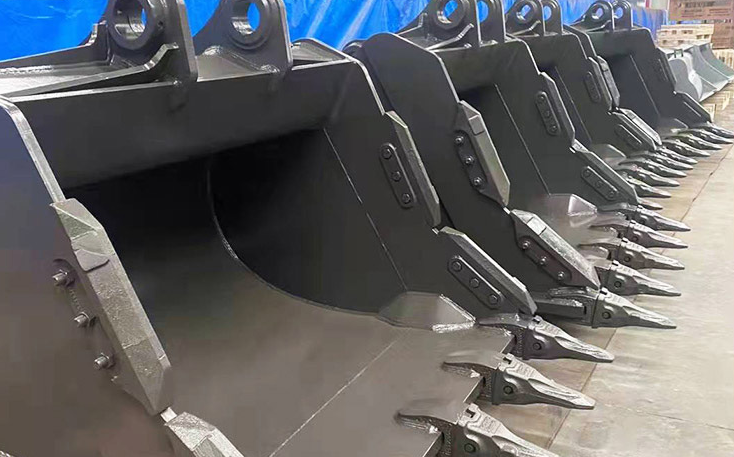
Excavator Bucket Selection Guide 2026 — Types, Prices & Pro Tips

Choosing the wrong bucket can cost you hours of lost productivity and thousands in repairs. Yet most buyers pick buckets by machine size alone — ignoring the most important factor: operating conditions.
This excavator bucket selection guide 2026 covers everything you need to know — from bucket types and material specs to pricing, factory evaluation, and common pitfalls. Whether you’re a dealer, contractor, or mining operation, knowing the difference between a standard bucket and a rock bucket can save you 3–5x in replacement costs.
1. Bucket Types — Which One Do You Need?
The first step in your excavator bucket selection guide 2026 is matching the bucket type to your work conditions. Here’s a quick overview:
| Type | Best For | Material | Price Range (FOB) |
|---|---|---|---|
| Standard Earth Bucket | Sand, topsoil, general earthmoving | Q345B steel | $500–$2,200 |
| Heavy-Duty Bucket | Gravel, construction debris, hard clay | Q345B + NM360/400 wear plate | $900–$3,200 |
| Rock Bucket | Quarries, blasted rock, granite | Q345B + NM450 / Hardox 450/500 | $1,600–$5,800 |
| Gradation/Sorting Bucket | Sand/gravel separation, river dredging | Q345B frame + NM400 reinforcement | $700–$3,000 |
| Hydraulic Grab | Log handling, scrap, bulk material | Q345B + hardened pins | $1,800–$8,500 |
Quick rule of thumb: Earth → standard bucket. Gravel/hard clay → heavy-duty bucket. Rock/blasting → rock bucket. If in doubt, go one grade higher — the extra $300–$800 upfront can double or triple your bucket’s service life.
2. Bucket Size by Excavator Tonnage
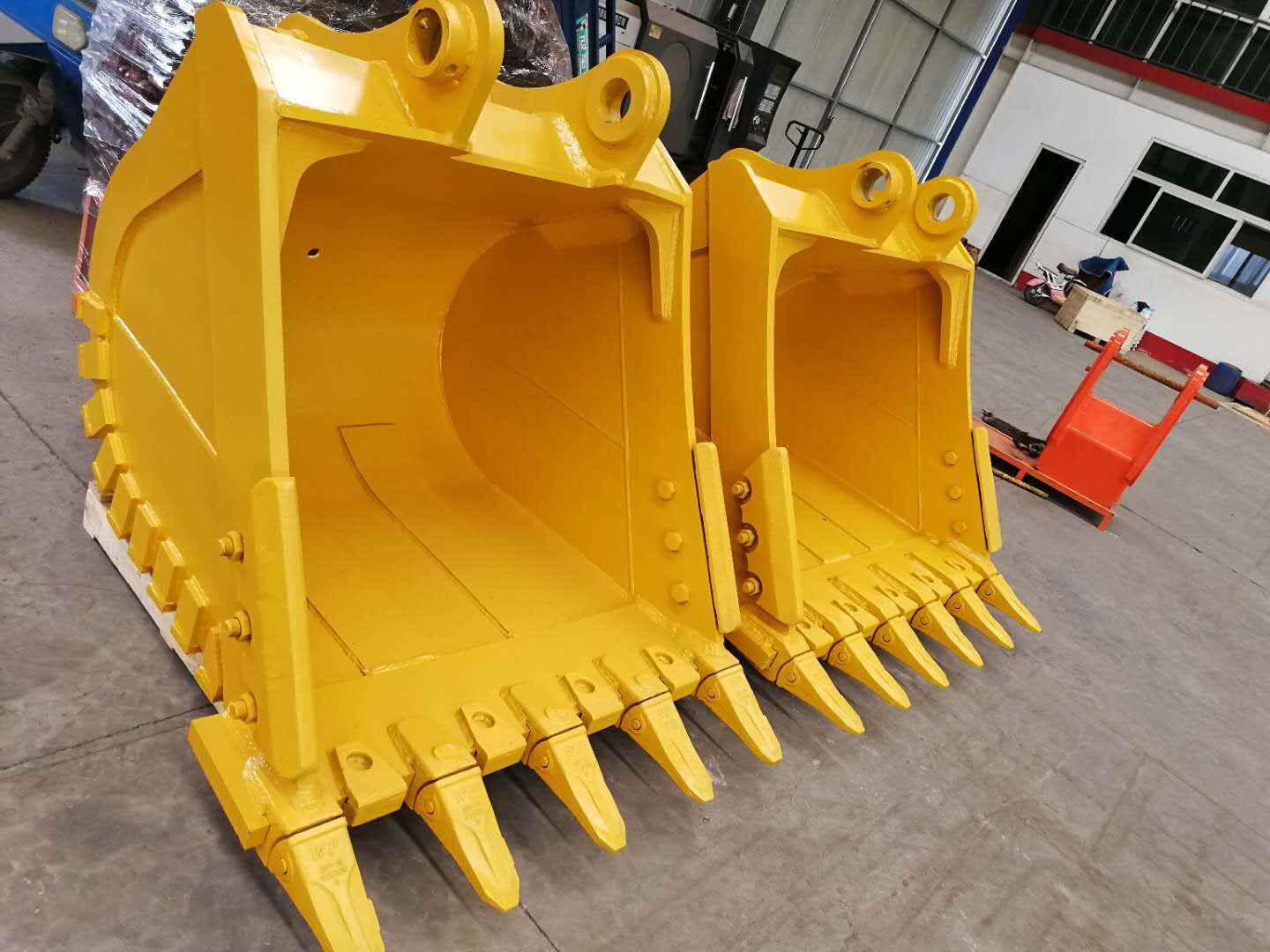
Choosing the right capacity is just as important as the right type. An undersized bucket wastes fuel; an oversized one stresses the excavator arm and risks tipping.
| Excavator Size | Bucket Capacity (m³) | Typical Use |
|---|---|---|
| 1–6 tons | 0.1–0.45 | Small trenching, landscaping |
| 10–16 tons | 0.5–0.8 | Utility construction, roadwork |
| 20–25 tons | 0.9–1.4 | General contracting, medium excavation |
| 30–36 tons | 1.5–2.2 | Heavy earthmoving, mining |
| 40–50 tons | 2.5–8.0 | Large-scale mining, quarry operations |
Note: Bucket capacity depends on material density. For heavy rock, reduce the rated capacity by 15–20% to protect the excavator.
3. Material & Build Quality — What Makes a Bucket Last?
Not all buckets are built the same. Here’s what separates a long-lasting bucket from a disposable one:
Plate Thickness (mm)
| Type | Bottom Plate | Side Plate |
|---|---|---|
| Standard | 10–16 | 8–14 |
| Heavy-Duty | 12–20 | 10–16 |
| Rock | 16–30 (double-layer reinforcement) | 14–25 |
Tooth Holder Types
- Bolted tooth holders (standard) — Easy to replace, lower maintenance cost
- Welded tooth holders (optional) — Better impact resistance, ideal for heavy rock
Manufacturing Process (Factory Standard)
- CNC plasma/laser cutting — precise dimensions
- Large CNC bending — consistent bucket geometry
- Robot welding + manual multi-pass welding at critical joints
- Stress relief (vibration or natural aging) — reduces cracking risk
- Wear plate inlay, localized hardfacing, reinforcement ribs
- Shot blasting + epoxy zinc-rich primer + topcoat — anti-corrosion
- Standardized pressing of tooth holders, pins, and bushings
- Dimension check, weld inspection, load test before shipping
4. How to Spot a Cheap, Low-Quality Bucket
The market is full of substandard buckets disguised as “budget options.” Here are the most common shortcuts:
- Thinner steel than advertised — 12mm stamped as 16mm
- Ordinary Q235/Q345 passed off as NM or Hardox — no wear resistance
- Full weld → tack weld + skip weld — cracks within weeks
- No stress relief — weld joints fail under cyclic loading
- Reinforcement ribs and wear plates removed — structural weakness
- Cheap tooth holders, bucket teeth, pins, bushings — premature wear
- Non-standard mounting dimensions — forced fit, sloppy operation
- No shot blasting, no primer — rust starts after the first rain
- False capacity/weight ratings — no factory QC
5. Factory Comparison — Big Factory vs. Small Workshop
| Factor | Professional Factory | Small Workshop |
|---|---|---|
| Equipment | Automated line, robot welding, shot blasting booth | Basic manual tools |
| Materials | Certified steel, full thickness guarantee | Cut corners, inconsistent grade |
| Process | Standardized flow + stress relief + full inspection | Simplified or skipped entirely |
| Stock | 1,000+ units in warehouse, fast delivery | No stock, unstable lead time |
| Export Readiness | CE/ISO certified, full documentation | No certification, not export-ready |
| After-Sales | 6–12 month warranty, lifetime parts supply | No warranty, hard to chase for issues |
Shanxi Yongle Machinery is a dedicated excavator attachment supplier with a 2,000+ sqm warehouse and factories that serve OEM-level customers. We carry buckets from 1–50 tons in stock, with full export documentation (CE, ISO, customs clearance) and a 12-month warranty on rock buckets.
6. How to Find a Reliable Bucket Factory
- Clarify your needs — export or domestic, mining or earthmoving, choose a factory with matching expertise
- Initial online screening — check production license, export certificates, workshop videos
- Technical verification — ask about plate specs, structural design, anti-corrosion process
- Site visit (or video walkthrough) — inspect raw materials, welding quality, stock, inspection equipment
- Start with a trial order — one small batch to verify quality before scaling up
7. Bucket Service Life & Load Capacity
Expected Service Life (Normal Use)
- Standard earth bucket: 8,000–12,000 hours
- Heavy-duty bucket (gravel): 12,000–15,000 hours
- Rock bucket (mining): 20,000–30,000 hours
Key factors affecting lifespan:
- Hardox steel lasts 4–6x longer than standard steel in abrasive conditions
- Replaceable wear parts (bottom plates, side cutters, tooth holders) extend overall bucket life
- Proper operation — no impact loading, no overloading — can increase life by 30%+
Load Capacity Comparison
At the same tonnage, a rock bucket’s load capacity is roughly 1.5–2x that of a standard bucket, thanks to thicker plates, double-layer reinforcement, and higher-grade materials.
8. Frequently Asked Questions
- Is the welding strong enough? Will it crack?
Full robot welding + manual multi-pass at critical points plus stress relief treatment. Under normal working conditions, cracking is extremely rare. - How long will the bucket last?
Depends on the working condition and material. A rock bucket with Hardox can last 3–5x longer than a standard bucket in abrasive environments. - Which bucket type should I choose?
Earth → standard; gravel/demolition → heavy-duty; rock/quarry → rock bucket. If your work includes multiple terrains, go with a heavy-duty as a safe all-rounder. - Can old or modified excavators use these buckets?
Yes. Just provide the excavator model and mounting dimensions, and we custom-fit. 100% compatibility guaranteed. - What’s the price range for a 20-ton excavator bucket?
Standard from ~$1,200, heavy-duty from ~$1,800, rock bucket from ~$2,800. Prices vary by material and configuration — contact us for a current quote. - Do you provide export packaging and customs documents?
Standard export packaging (steel frame + waterproof) with full customs clearance documents including CE/ISO certificates. - What’s the warranty?
Standard/heavy-duty: 6 months. Rock bucket/Hardox models: 12 months. Covers weld cracking and process defects. Wearing parts (teeth, bushings) and damage from misuse are not covered. - What sizes do you keep in stock?
Most stocked: 1–6 ton, 12–22 ton, and 30–36 ton ranges. 40–50 ton mining buckets are mainly made-to-order with limited stock. - How long does custom manufacturing take?
Standard custom: 15–25 days. Large mining buckets: 25–40 days depending on complexity. - How do your buckets compare to OEM (Komatsu, CAT, Hitachi) originals?
Our buckets use the same grade steel and comparable manufacturing processes at roughly 40–60% of the OEM price. OEM fans may still prefer originals for fit consistency, but many dealers and contractors find our buckets deliver equal performance at a much better value.
Need Help Choosing the Right Bucket?
With 2,000+ sqm of warehouse space and $500,000+ in stock, Shanxi Yongle Machinery can supply excavator buckets for any make and any model — from 1-ton minis to 50-ton mining giants.
Contact us for a quote or technical consultation:
📧 donald@cmpartscn.com
🌍 CMPartsCN.com
Prices are for reference only. Actual pricing depends on configuration, material costs, and order volume. Contact us for a current quote.
One thought on “Excavator Bucket Selection Guide 2026 — Types, Prices and Pro Tips”