

Market Insights
Electric Wheel Loaders 2026: Chemical Plant Case Study

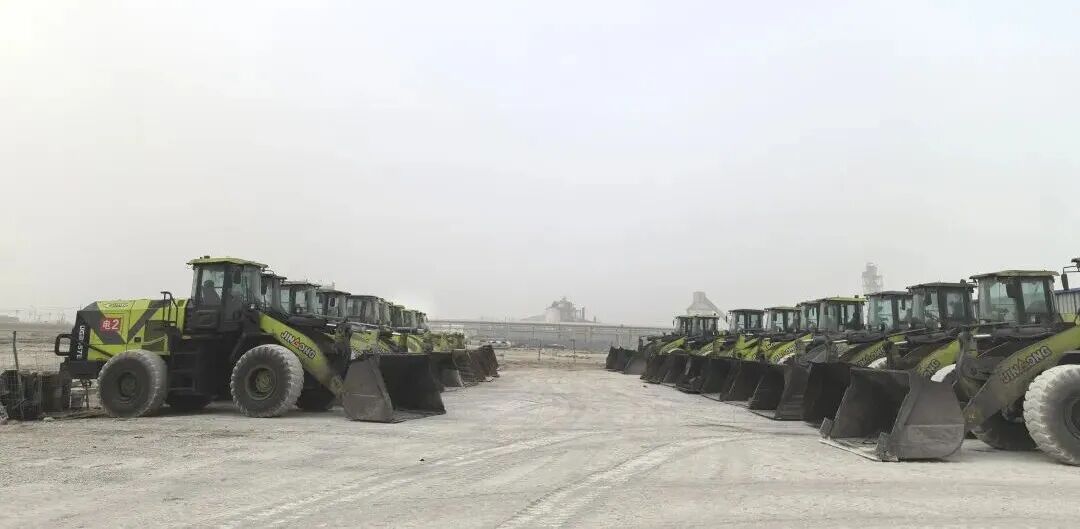
A large chemical plant in China runs its material handling on a fleet most operators would still call exotic: more than 30 battery-electric wheel loaders, working coal handling, calcium carbide transfer and furnace feed around the clock. Not a demo yard. Not a pilot with two machines and a camera crew. A production fleet that grew from a handful of units to over thirty, one purchase order at a time.
We distribute these machines (Jingong / JGM brand, Fujian, since 1979), so we looked at this electric wheel loader case study the way a buyer would: what actually convinced the plant manager, what the numbers look like after several years of real duty cycles, and what overseas fleet owners should copy — or not.
The Site: Coal, Carbide and 12-Hour Shifts
The plant’s loading work is the hard kind. Coal unloading and stockpile handling, calcium carbide transfer between process areas, and precision feeding into furnaces. Heavy loads, abrasive dust, high ambient heat, and almost no idle time: the machines run roughly 12 hours a day with two operator shifts, so uptime is the whole business case.
Dust and heat matter more than people expect when comparing an electric wheel loader with a diesel one. An electric drive has no exhaust heat load in the cab area, fewer fluids to cook off in a hot, dusty environment, and no diesel particulate hanging over the feed point. Operators notice it first — one driver at the site says his crew now fights over who gets the electric machines: “full bucket every pass, and it’s far more comfortable to run — we all want the electric one.”
How the Fleet Grew: Proof Beats Brochures
The deployment pattern is what caught our attention. The plant did not buy 30 electric wheel loaders up front. It bought a few, kept them in the worst duty cycle it had, then ordered more, and more. Today the fleet is over 30 JGM electric loaders.
The first batch has now run through several summers and winters on site, with the longest single-machine hour meter reading 20,000 operating hours — and the maintenance record behind that number is the real story: no performance collapse, no battery swap, routine wear items only. For a buyer evaluating an electric wheel loader, 20,000 hours on a first-generation field unit is a stronger signal than any spec sheet.
The cost side is where the repeat orders became inevitable. The plant’s equipment manager put it in plain numbers we can translate for you:
| Cost item (per machine, per day) | Diesel wheel loader | JGM electric wheel loader |
|---|---|---|
| Energy | Fuel: 1,000+ CNY/day (≈140+ USD) | Electricity: under 300 CNY/day (≈42 USD) |
| Routine engine maintenance | Oil, filters, injectors, aftertreatment | Nearly eliminated (no engine, no exhaust system) |
| Environmental / compliance pressure | Site emission and dust-housekeeping burden | Zero on-site exhaust |
| Reported net saving | — | 500,000+ CNY/year (≈70,000 USD) |
At the plant’s own arithmetic, one replacement pays back in well under two years and then prints savings for the rest of the machine’s life. Multiply by thirty-something units and the site’s fleet decision stops being an environmental gesture — it becomes a profit line. “Switch early, save early; keep running, keep saving” is how the manager summarized it.

What This Means for Buyers Outside China
Three practical takeaways from this electric loader case study:
- Start with your worst duty cycle, not your easiest. The plant proved the machine on coal and carbide — the applications diesel defenders say are “too hard” for electric. If it survives 20,000 hours there, everything else is easy.
- Do the energy math in your own tariff sheet. The 70% energy-cost gap holds almost anywhere, but the payback length depends on your electricity price, diesel price and daily run hours. A 16-tonne electric wheel loader burning low daily hours in a remote site is a different answer than a 12-hour/tyre-shredding yard.
- Check the support stack before the sticker price. Battery, motor and controller service is not something every diesel mechanic can touch. Ask the supplier what diagnostic training, spare-parts stock and response time they commit to in writing — that, more than the brochure, is what protects 20,000 hours.
Where it genuinely gets harder is charging infrastructure and cold-climate energy density — if your site has no grid connection on the working face, a diesel or hybrid still wins today. We would rather say that up front than sell someone the wrong machine.
How We Fit Into a Decision Like This
As the authorized distributor for Jingong’s electric wheel loaders (JGM857E and the wider E/HEV range), we supply the machine plus the boring-but-critical parts: matched-set wear parts in stock for the undercarriage and bucket side, operator training guidance, and export documentation. If you are evaluating an electric fleet step, tell us your material, shift pattern and grid situation, and we will size it honestly — including the answer “electric is wrong for this one.”
FAQ
How many operating hours have the first electric loaders run?
The earliest units at this chemical plant logged up to 20,000 hours per machine over several years of 12-hour daily operation, with no major powertrain failures reported.
What was the real saving per machine?
The site calculated roughly 500,000 CNY (around 70,000 USD) per machine per year, combining energy, engine maintenance and compliance costs.
Can electric wheel loaders handle coal and carbide duty?
Yes — that is exactly the duty this fleet runs, which is why the case is notable: it is not a light-materials showcase.
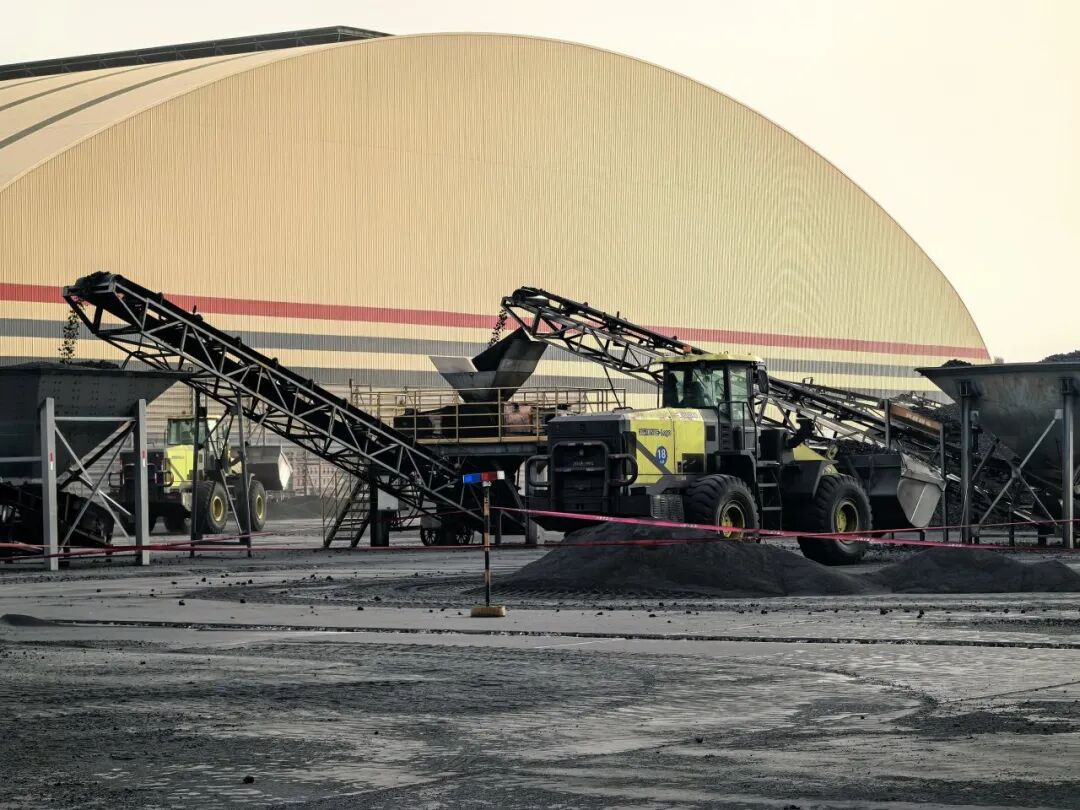
Case photos courtesy of Jingong New Energy’s official WeChat channel (JINGONG JIN-GONG brand account).