

Market Insights
Excavator Teeth Selection Guide: Choose by Brand and Tonnage 2026

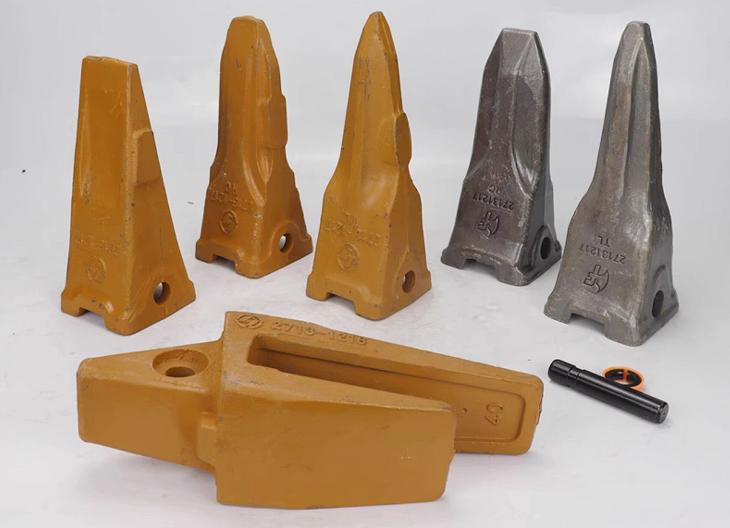
Excavator Teeth Selection Guide: Choose by Brand & Tonnage 2026
Choosing the right excavator teeth for your machine is harder than it looks. You own a CAT 320 — your supplier asks: “J350 or J460?” You google your Komatsu PC200 teeth and get 10 different part numbers. This excavator teeth selection guide breaks it down by brand and tonnage so you get the exact fit the first time.
Excavator teeth look like a commodity. But the wrong tooth either won’t lock onto your shank, or worse — it falls off mid-shift. Between CAT, Komatsu, Hitachi, Volvo, and Kobelco, each brand runs a different tooth system with its own pin pitch, shank geometry, and retention design.
This guide covers how to identify the right tooth system for your machine — by brand, model, and tonnage class — so you order the exact part the first time.
Why Tooth Selection Matters More Than You Think
Using the wrong excavator teeth means:
- Poor fit — won’t lock into the shank, falls out under load
- Accelerated wear — mismatched geometry puts stress on the wrong spots
- Shank damage — an ill-fitting tooth can destroy your shank ($200-500 each to replace)
- Lost productivity — 15-30 minutes per tooth swap if it keeps coming loose
According to wear analysis data, the right tooth lasts 20-40% longer on the right machine and application. The key is knowing your brand’s tooth system naming, not just the machine model.
Caterpillar Tooth Systems
CAT uses the most recognizable system in the industry. Their tooth naming tells you the size, duty class, and often the tip style.
J-Series (Most Common)
| Code | Machine Class | Pin Pitch (mm) | Typical Fit |
|---|---|---|---|
| J200 | 1-6 ton mini | ~68 | CAT 301.5, 303.5 |
| J300 | 1-8 ton mini | ~76 | CAT 305.5, 307, Kubota U55 |
| J350 | 8-20 ton | ~112 | CAT 313, 315, 317 |
| J400 | 12-25 ton | ~127 | CAT 318, 320, 323 |
| J460 | 20-35 ton | ~152 | CAT 326, 330, 336 |
| J550 | 30-50 ton | ~200 | CAT 340, 345, 349 |
Tip style suffixes on CAT teeth:
- ET — Extra Trenching (narrow, for utility work)
- AB — Abrasion (thickened for sand/gravel)
- GD — General Duty (all-rounder)
- HD — Heavy Duty (thicker metal, for rock)
- ER — Extra Rock (most durable, for severe impact)
- P — Penetration (sharp tip, for digging in hard ground)
Example: J400 HD = J400 size, Heavy Duty tip — fits CAT 320 class in rocky conditions.
Komatsu Tooth Systems
Komatsu uses a different numbering system — mostly 17T, 18T, 20T, 25T series. These are NOT interchangeable with CAT J-series, even if they look similar.
| Series | Machine Class | Pin Hole Ø (mm) | Typical Fit |
|---|---|---|---|
| 17T-18T | 1-5 ton mini | 16-18 | PC30, PC35, PC40, PC50 |
| 20T-22T | 6-10 ton | 25 | PC56, PC70, PC78, PC95 |
| 25T-27T | 15-25 ton | 31 | PC138, PC160, PC200, PC210, PC228 |
| 30T-32T | 30-50 ton | 38 | PC300, PC350, PC400 |
| 35T-40T | 50+ ton | 45+ | PC450, PC500, PC550, PC600 |
Komatsu wear grade indicators:
- KMF — K-Metal Front (standard toughness)
- VK — Very K-Metal (increased wear life)
- ES — Extra Service (rock duty)
- FS — Full Service (most durable, extreme conditions)
⚠️ Common mistake: A 25T Komatsu tooth and a J400 CAT tooth have similar pin sizes but different shank profiles. They are NOT interchangeable.

Hitachi, Volvo, Kobelco & Other Brands
Hitachi
Hitachi uses H-series teeth (H3, H5, H7, H9, H11). The number correlates to machine tonnage range:
- H3 — ZX27-55 (3-5 ton)
- H5 — ZX70-120 (6-12 ton)
- H7 — ZX130-200 (13-20 ton)
- H9 — ZX210-330 (21-33 ton)
- H11 — ZX350-490 (35-50 ton)
Volvo / Kobelco
Most newer Volvo and Kobelco machines use a V-series tooth system (VH, VX, VHP). Older models often follow Hitachi or Komatsu patterns depending on the OEM partnership at that time. Always check the physical shank before ordering.
| Brand | System | Notes |
|---|---|---|
| Hitachi | H3 → H11 | Number = tonnage class |
| Volvo | VH / VX / VHP | VH = standard, VX = heavy, VHP = extreme |
| Kobelco | V-series (like Volvo) or Komatsu style on older models | Check shank shape |
| Hyundai / Doosan | Generally Komatsu-compatible patterns | Many accept 25T/30T family |
| JCB | JCB-specific system (not J-series) | Narrower pin pitch than CAT J |
| SANY / XCMG / LiuGong | Chinese brands often follow CAT J-series or ISO standard | Check shank style — most are J-compatible |
Quick Reference: Match by Machine Tonnage
If you only know your excavator’s weight class, start here:
| Tonnage | CAT | Komatsu | Hitachi | Chinese Brands |
|---|---|---|---|---|
| 1-5 ton mini | J200 / J300 | 17T-18T | H3 | J200 / J300 |
| 6-10 ton | J300 / J350 | 20T-22T | H5 | J300 / J350 |
| 12-20 ton | J400 | 25T-27T | H7 | J400 |
| 20-35 ton | J400 / J460 | 25T-27T | H9 | J460 |
| 35-50 ton | J550 | 30T-32T | H11 | J550 |
| 50+ ton | CNT / specialized | 35T-40T | H12+ | Special order |
How to Identify the Right Tooth (4-Step Method)
When you’re not sure, follow this:
- Check your current tooth for a number — stamped on the side: Jxxx, xxxT, Hx, etc. Google that number + “excavator tooth dimensions” to confirm pin pitch.
- Measure the pin hole center distance — the horizontal distance between the two pin holes on your shank. This is the single most reliable dimension.
- Identify the retention type — side-pin (CAT J-series) or top-pin (Komatsu T-series). Side-pin teeth have a notch on the side; top-pin have a vertical notch.
- Match by machine model — use the tables above as a cross-reference, then verify with a photo of your shank if possible.
Not sure which tooth fits your machine? Send us your machine model and a photo of your shank — we’ll reply within hours with the exact match.
Material & Coating Options
Once you know the right tooth system, choose the material grade:
| Grade | Material | Hardness (HRC) | Best For |
|---|---|---|---|
| Standard | Manganese steel (Mn13) | 38-45 | Light soil, sand, general backfilling |
| Hardened | 40CrMnMo + heat treat | 45-52 | Mixed soil, clay, gravel, limestone |
| Rock grade | Special alloy + through-hardened | 50-55 | Granite, basalt, blasted rock, iron ore |
Quick rule: Use standard teeth for soft ground (80%+ uptime), hardened teeth for mixed ground, and rock grade for anything that makes your operator complain about the noise inside the cab.
Shop Our Bucket Teeth
Matching the selection guide above, here are the bucket teeth we stock:
| Tonnage Class | Recommended Product | Type | Price |
|---|---|---|---|
| 1-5 ton mini | JGM Bucket Teeth – Standard Type | Standard (J200/J300 compatible) | From $10/set |
| 20-35 ton | Excavator Bucket Teeth – Heavy Duty Mining | Heavy Duty (J400/J460 compatible) | From $32/set |
Not sure which size fits your machine? Check the selection guide or contact us with your machine model.
Frequently Asked Questions
Can I use CAT teeth on my Komatsu? Or vice versa?
Generally no — CAT J-series and Komatsu T-series have different shank profiles and retention pin designs. Even when the pin size is similar (J400 vs 25T), the locking geometry differs. Always check physical fit before buying in bulk.
How do I find my machine’s tooth system if I don’t have the part number?
Measure the pin hole center distance on your shank, identify the retention type (side pin or top pin), and reference the tables above. If unsure, send us a photo — 30 seconds and we’ll confirm.
What does the number on my tooth mean?
For CAT, it’s the size code (J200 → mini, J460 → 30-ton). For Komatsu, it’s the tooth series (25T, 30T) which correlates to a pin hole range. The letter suffix (HD, ET, GD on CAT; VK, ES on Komatsu) tells you the duty class.
Is “heavy duty” always better?
No. Heavy duty teeth are thicker and heavier, which means more weight on the bucket edge and less penetration in soft ground. Use HD for rock, standard for soil. Using HD in a sand quarry means wearing out your bucket pins faster for no benefit.
Chinese brand excavators — what tooth system do they use?
Most Chinese brands (SANY, XCMG, LiuGong, Sunward, SDLG) follow CAT J-series or an ISO-compatible standard. J400-compatible is the most common for mid-size SANY machines. But always verify by checking the shank — compatibility is high but not guaranteed across all generations.
Can I switch tooth systems on my existing shank?
Only if you replace the shank too. The tooth and shank are a matched pair — you can’t put a J460 tooth on a J400 shank. Switching systems requires welding on new shanks (adapter), which costs $300-800 per bucket depending on size.
How do I know if a replacement tooth is good quality?
Check three things: (1) chemical composition — should match OEM specs (e.g., 40CrMnMo for hardened teeth), (2) hardness report (HRC 45-52 minimum for aftermarket hardened), (3) dimensional inspection — pin hole alignment within ±0.5mm. Reputable suppliers provide these on request.
Do your teeth come with pins and retainers?
Yes — all our teeth include matching pins and retainers for the specified tooth system. We also stock universal pin systems (Keystone, Hammerless) upon request for fleets that swap teeth frequently.
What’s your minimum order and lead time?
Minimum order is 10 pieces per size (mix-and-match across tooth types welcome). Standard lead time is 7-15 days from order. Express orders (3-5 days) available for urgent projects.
Do you match OEM tooth specs or only make generic ones?
We manufacture to OEM specifications — same materials, same heat treatment cycle, same dimensional tolerances. Our teeth are functionally equivalent to OEM at a fraction of the price. Every batch includes 100% hardness testing and spot dimensional inspection per ISO 9001.
Still unsure which tooth fits your machine? Tell us your excavator model and send a photo of your shank — we’ll reply in hours with the exact match. WhatsApp: +852 60391704 | Email: info@cmpartscn.com
Glad this selection guide is proving useful! At CMPartsCN, we stock bucket teeth for all major excavator brands — Komatsu, CAT, Hitachi, Kobelco, Volvo, Doosan and Chinese makes. We work directly with factories across Shandong, Henan, Jiangsu and Anhui clusters, so we can match the right tooth profile and hardness grade to your specific machine model and working conditions. Send us your machine specs and we will suggest the best option with sample support.