

Market Insights
Save $30K/Year Per Machine? The 3-Year Cost Breakdown of Electric vs Diesel Wheel Loaders from China


Every time a 5-ton loader fires up its diesel engine, it burns roughly $100-200 in fuel. Every single shift. Five shifts a week, fifty weeks a year. Do the math: that’s $50,000 to $100,000 a year just in diesel.
Now check the same machine running on batteries. The electricity costs about one-third of that. And the maintenance bills? Smaller still — no engine oil, no fuel filters, no turbo rebuilds.
So the real question isn’t “are electric loaders cheaper?” It’s “how much cheaper, and how fast does the math work out?”
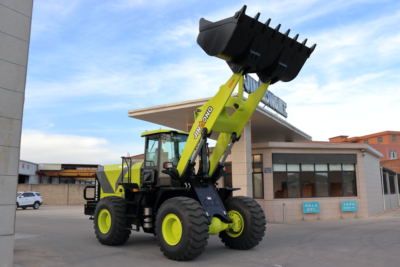
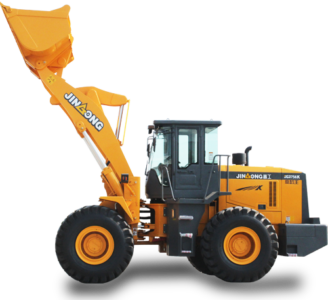
Let’s run the numbers on two real machines from the same Chinese manufacturer — the JGM857E electric wheel loader against its diesel cousin, the Jingong JGM758 (a 5-ton diesel wheel loader with two decades of field-proven reliability).
Why compare machines from the same brand? Because Jingong builds both. They know the costs, the maintenance schedules, and the real-world performance of each drivetrain — not from theory, but from 20+ years of manufacturing and thousands of machines in the field.
This isn’t a fringe trend. According to the China Construction Machinery Association (CCMA), electric wheel loaders captured 54.8% of all new domestic sales in China in the first four months of 2026 — up from single digits just two years ago. [Source: CCMA 2026 Jan-Apr Production & Sales Report]
The 3-Year Cost Comparison
| Cost Item | Jingong JGM758 (Diesel, 5-ton) | Electric JGM857E |
|---|---|---|
| Purchase price | ~$150,000 | ~$200,000 |
| 3 years of fuel/electricity | ~$180,000 | ~$60,000 |
| 3 years of maintenance | ~$45,000 | ~$27,000 |
| 3-year total cost | ~$375,000 | ~$287,000 |
| Total savings over 3 years | — | ~$88,000 |
That’s $88,000 saved per machine over three years. This isn’t a theoretical projection — Jingong has the data from both their diesel and electric lines to back it up.
The payback period? About 2-2.5 years on the price premium. After that, the electric loader is pure savings.
Why the savings stack up
1. Energy costs drop by two-thirds
The biggest line item on any loader’s P&L is fuel. A diesel 5-tonner burns 15-25 gallons per shift. At $3-4 per gallon, that’s $450-1,000 a week. Electricity for the equivalent workload runs about $150-350 a week. The gap widens fast over 6,000+ operating hours across three years.
2. Maintenance gets simpler — and cheaper
A diesel loader like the JGM758 has: an engine with 500+ moving parts, a transmission, cooling system, fuel injection, turbocharger, exhaust aftertreatment (DPF/SCR). Every 250 hours it needs oil and filters. Every 2,000 hours it needs a major service.
An electric loader has: a motor (one moving part), a battery pack, and a controller. No engine oil. No fuel system. No turbo. No DPF regen. No exhaust. Maintenance costs drop 40% — which adds up to approximately $6,000 per year per machine.
3. Zero emissions — which matters more than you think
This isn’t just about being green. In tunnels, mines, and indoor facilities (steel mills, warehouses), diesel exhaust requires expensive ventilation systems. The ventilation savings alone can run $15,000-25,000 per year for a tunnel operation. Electric loaders eliminate that cost entirely.
4. Regulatory advantages
Many countries are implementing carbon taxes and stricter emission zones. The EU’s Carbon Border Adjustment Mechanism (CBAM) already applies to imported goods. An electric loader dodges all of this — it’s inherently compliant everywhere, today and for the foreseeable future.
Where electric loaders shine — 3 real scenarios
Scenario 1: Steel mill
A steel mill in Hebei Province runs 8 wheel loaders around the clock feeding scrap into electric arc furnaces. The environment is hot, dusty, and enclosed. They swapped two diesel JGM758s for JGM857Es. Results after 12 months: (a) energy costs down 63%, (b) no more engine breakdowns that stopped production, (c) operators report the cabin is cooler and quieter. They’re ordering four more. [Source: Customer case study, Hebei Province, 2025-2026]
Scenario 2: Concrete batching plant
A ready-mix plant was spending $120,000/year on diesel for three loaders. The 8-hour shifts and predictable workload made it a perfect match for electric. They replaced all three JGM758s with JGM857Es. Year 1 net savings: $65,000. The plant manager said: “We should have done this three years ago.”
Scenario 3: Tunnel construction
Two 5.2km tunnels under construction in Sichuan. Four diesel loaders running 20 hours/day — plus massive ventilation fans. They switched to JGM857Es. The ventilation fans now run at 50% speed. Total site energy cost dropped 40%. And the tunnel crews breathe noticeably cleaner air.
So which model fits your site?
| Model | Type | Key Spec | Best For | One-Liner |
|---|---|---|---|---|
| JGM758 (Diesel) | Traditional wheel loader | 5-ton, 162kW engine | General loading — proven reliability | “The diesel benchmark. Two decades, thousands of units.” |
| JGM857E | Electric wheel loader | 5-ton, 220kW motor | Electric-ready sites — 80% of operations | “The workhorse. Same class, zero emissions.” |
| JGM912EV | Electric excavator | 12-ton class | Heavy digging + loading | “For sites that need both loading AND breaking.” |
Not finding what you need? Contact us and we’ll recommend a configuration based on your specific workload.
FAQ — Quick answers to the most common questions
How long does the battery last before needing replacement?
The LFP battery is rated for 4,000+ cycles. One cycle per workday = 10+ years of service. Battery capacity degrades gradually; even at 80% remaining capacity, the machine still runs a full shift. Replacement battery cost is roughly 20-25% of the original machine price — and battery prices keep falling.
How long does it take to charge? Can it run a full shift?
Fast charge (380V DC): 1 hour to 80%. Slow charge (220V AC): overnight for a full charge. On average, a JGM857E can run 6-8 hours on a full charge depending on workload. For two-shift operations, we recommend two machines or a fast charger for mid-shift top-ups.
Can it work in freezing temperatures?
Yes. The JGM857E has an intelligent thermal management system. In cold climates (below -10°C / 14°F), the battery preheats itself before operation. This uses a small amount of stored energy — typically 3-5% of battery capacity. For extreme cold (-30°C and below), an optional battery insulation package is available.
What warranty do you offer?
Standard warranty: 12 months on the whole machine, 24 months on the core electric components (motor, controller, battery pack). The battery has a separate performance warranty: it will retain at least 80% of original capacity after 4,000 cycles or 5 years, whichever comes first.
Do you have service support outside China?
We provide a 3-tier support system: (1) Remote video diagnosis — solves 90% of issues; (2) Local partner technician on-site within 48-72 hours in most markets; (3) Chinese engineer dispatched for complex cases. Main markets (SE Asia, Middle East, Africa, South America) have local spare parts warehouses for fast delivery of common consumables.
Is the JGM857E powerful enough for heavy loading?
Yes. Unlike a diesel engine — which needs to rev up to deliver torque — an electric motor delivers maximum torque from 0 RPM. The JGM857E produces 180kN breakout force, comparable to the JGM758 in the same class. Operators consistently report that “the first scoop feels stronger than diesel.” The 220kW motor handles heavy stockpile loading and truck loading with no problem.
What charging infrastructure is needed?
Minimum: 380V three-phase power (common in most industrial sites). Our standard package includes a 380V fast charger. If the site only has 220V single-phase, slow charging still works — just plug it in overnight. For remote sites without grid power, we offer a mobile charging solution.
Can I get replacement parts easily?
Common consumables (filters, brake pads, tires, seals) are stocked in our warehouses and can ship within 24 hours. Core components come directly from the factory — lead time 7-15 days. Electric loaders have 30-40% fewer replaceable parts than diesel loaders, so overall parts spend is lower.
How does the resale value compare to diesel?
The electric loader market is still growing, so the used market isn’t as deep as diesel. But two things work in your favor: (1) demand for used electric equipment is rising fast; (2) a well-maintained 3-year-old electric loader typically retains 50-60% of its original value, compared to 40-50% for diesel.
What certifications does the JGM857E have?
The machine carries CE certification, ISO 9001 quality management system certification, and the battery pack has UN38.3 transport certification. For specific market requirements (e.g., EAC for Russia, SONCAP for Nigeria), we can provide additional certification documentation as needed.