

Market Insights
How to Choose Bucket Teeth for Chinese Excavators 2026

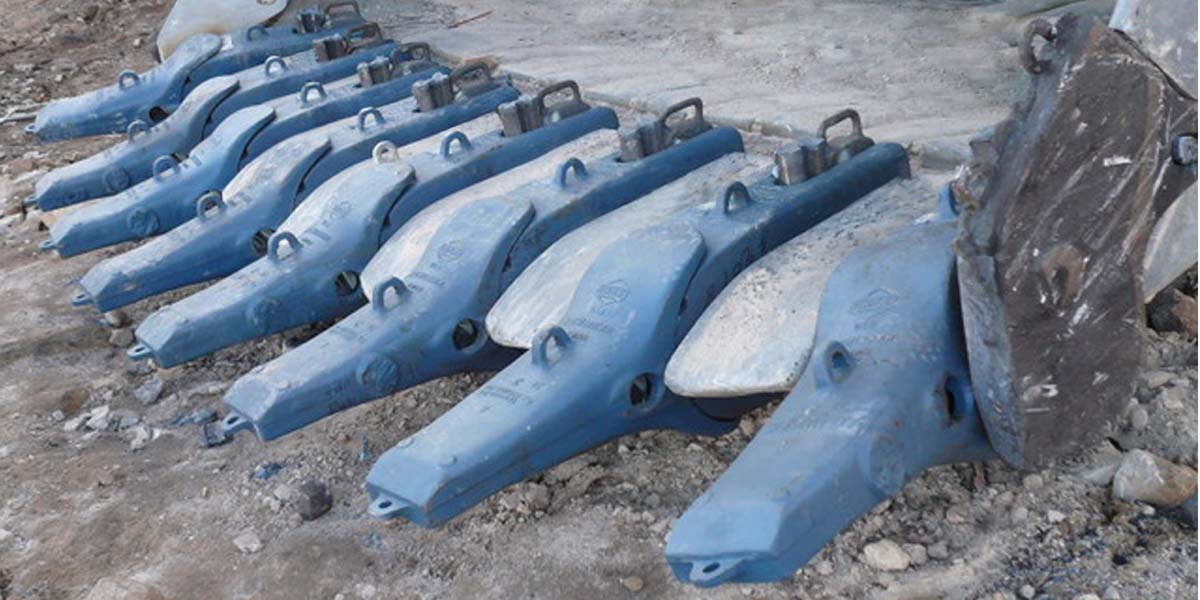
How to Choose Bucket Teeth for Chinese Excavators 2026
A contractor in Kazakhstan once told us his machine ate three sets of bucket teeth for excavators from China in four months — worn unevenly, tips chipped, money gone. The teeth were fine. The adapters underneath them were done. Most bucket teeth complaints we hear are not quality problems — they are matching problems. This guide covers how to pick the right bucket teeth for Chinese-brand excavators, what material actually means for your bill, and when the real fix is not the tooth at all. If you are sourcing China aftermarket parts, the answers below will save you one or two replacement cycles.
Some context on why this matters more than ever in 2026: China’s machinery industry association (CCMA) reported 19,716 excavators sold in August 2026 alone (+19.3% year on year, with domestic sales up 3.92% and exports up 32.7%) and 10,832 wheel loaders (+14.7%). Every one of those machines starts chewing through consumables the day it leaves the yard — and bucket teeth are the fastest-burning item on the list.
Material First: Cast, Forged, or Manganese?
Three materials dominate the aftermarket for China excavator bucket teeth, and each fails differently:
| Material | How it wears | Best for | Watch out |
|---|---|---|---|
| Cast alloy steel | Even, predictable wear; brittle if the alloy mix is cheap | General earthmoving, clay, sand | Budget castings crack on rock impact |
| Forged alloy steel | Slow, uniform wear; core stays tough | Quarries, hard rock, mixed debris | Costs 30-50% more per tooth |
| High-manganese steel | Work-hardens: surface reaches HRC 45-55 under impact, core stays ductile | High-impact mining, shot rock | Won’t harden without enough impact — a waste in soft dirt |
The counterintuitive part: high-manganese is the “strongest” option but the worst choice for light digging. Work hardening needs repeated impact to activate. Put manganese teeth on a 6-ton machine cleaning ditches and they wear like ordinary cast steel at premium prices. Match the material to the job, not to the spec sheet.
Tooth Type by Job Site
Salespeople ask “what’s your machine model?” The better question is “what does your bucket dig?”
| Condition | Tooth style | Why |
|---|---|---|
| Rock, quarry, frozen ground | Rock / long narrow tip (e.g. 1U3354 family) | Concentrates force, penetrates; wears slower under compression |
| Mixed: gravel, clay, demolition | General duty / tapered (e.g. 1U3350 family) | Balanced penetration and wear life |
| Soft soil, sand, cleaning trenches | Trenching / wide flat tip | Wide face resists abrasion, keeps bucket carryback down |
Pick the wrong family and you lose roughly half the life you should get — a rock tooth in clay polishes and wears flat; a trenching tooth in granite chips at the shoulder. This is the #1 mismatch we see in photo inspections from buyers.
Chinese Brands and CAT-Compatible Part Numbers
Here is the piece new importers rarely expect: a large share of Chinese excavators run on CAT-compatible tooth and adapter systems. SANY, XCMG, Lonking and SDLG machines commonly take 1U33xx, 1U20xx or 205-70-xxxx number groups, so a legitimate Chinese aftermarket tooth in the right spec often fits better than a box stamped with the machine’s own brand label — at a fraction of the OEM price.
| Machine brand | Tonnage band | Common tooth group | Note |
|---|---|---|---|
| SANY SY series | 6-14 t | 1U3350 / 1U3354 family | CAT J-pattern or E-series adapters depending on bucket |
| XCMG XE series | 13-22 t | 1U23xx / 9W88xx family | Larger machines mix adapter styles — measure, don’t guess |
| Lonking LG series | 5-8 t | 1U3350 / 205-70-11701 group | Jumbo variants exist — confirm pin bore |
| SDLG E series | 8-14 t | 1U20xx / 1U33xx family | OEM adapters widely used |
The one rule: never order by brand name alone. Order by adapter shape plus measured pin bore and tooth width. A supplier who asks for photos and caliper numbers before quoting is a supplier worth keeping.
The Hidden Killer: Your Adapters
When teeth wear unevenly — one end rounded, the other square — the adapters are already gone. Worn adapters tilt the tooth, the load shifts off-center, and new teeth wear in the same wrong pattern. You can measure it: pry out a mid-life tooth, push it side to side on the adapter, and read the gap at the nose.
- Under 3 mm: adapters healthy, teeth fine.
- 3-6 mm: plan the adapter change at your next tooth cycle.
- Over 6 mm: stop buying loose teeth. Replace teeth and adapters together.
Yes, a full adapter + tooth set costs more than a tray of teeth. It also lasts twice as long, because the new teeth sit straight and wear evenly. Replacing adapters on the same cycle as teeth is the single best value move in bucket consumables — the wear life of the tooth is capped by the looseness of the seat under it.
Run the 5-Year Numbers
A mid-size Chinese-brand machine doing 2,000 hours a year typically burns 2-3 full tooth sets. Compare two sourcing habits:
| “Cheapest tooth” buyer | “Right tooth” buyer | |
|---|---|---|
| Tooth unit price | $10+ per tooth | $10+ per tooth (standard) to $1,000+ (heavy-duty mining sets, like our mining line) |
| Sets consumed in 5 yrs | 4-5 (wrong type, uneven wear) | 2-3 (matched to job) |
| Adapter damage | Severe — $2,000-4,000 rebuild | Planned replacements, teeth+adapters as sets |
| Machine downtime | 10-15 days extra | Bulk change on scheduled days |
The second column usually wins by thousands of dollars. The tooth is a consumable; the adapter and the machine’s hourly rate are the real money.
Where We Come In
We are Shanxi Yongle — 20+ years in construction machinery distribution, a 2,000+ sqm warehouse and over $500K of stock in Shanxi, China. We carry bucket teeth, adapters, undercarriage and ground-engager sets for Chinese brands and CAT-compatible systems, and we pack mixed orders. If you want a no-nonsense check, send us a photo of your worn tooth and adapter and we will tell you what you actually need — teeth only, or teeth and adapters as a set. That advice costs nothing even when you don’t buy.
Want the deeper comparisons? See our excavator teeth selection guide by brand and tonnage, the how to vet a bucket teeth factory walkthrough, and the China undercarriage parts buyer guide.
FAQ
Q1: How long should a bucket tooth last?
Roughly 800-1,500 machine hours in general duty; 400-800 in rock work. Anything far below that points to tooth/adapter mismatch, not material quality.
Q2: Do Chinese bucket teeth fit CAT adapters?
Yes — the aftermarket exists because CAT adapter styles (J, LD, MAX-W) are the de facto standard. Quality Chinese teeth are made to those same dimensional drawings, in CAT-compatible part-number groups.
Q3: Can I mix old and new teeth?
Avoid it. Different wear profiles mean uneven loading on the bucket edge, and one new tooth on worn adapters will wear fast. Do complete sets.
Q4: What does HRC mean and what number should I want?
Rockwell hardness. Forged and manganese teeth should read HRC 45-55 on the worn surface. Below 40 means soft alloy; above 58 without toughness risks chipping.
Q5: My teeth wear with the tips leaning to one side — why?
That is classic adapter wear or a bent bucket lip. Check the nose gap first; straightening a lip beats buying new teeth that wear crooked.
Q6: Should I order by part number or by machine model?
Neither alone. Send the adapter photo plus measured pin bore, tooth width and center distance. Model names get changed between factory revisions; dimensions do not lie.
Q7: What MOQ makes sense for a first order of China bucket teeth?
Most importers start with 20-50 sets of their two fastest-wearing groups. Mixed containers are normal — our own trial orders start at a few cartons.
Q8: Is it worth buying high-manganese for my 20-ton mining machine?
In shot rock and primary breaking: yes — work-hardening gives the best cost-per-ton moved. In overburden or general loading, forged alloy is usually the smarter spend.
Ready to stop guessing? Email donald@cmpartscn.com with a photo of your current tooth and adapter, and we will send back a matched set recommendation — same as we do for buyers in Central Asia and the Middle East sourcing bucket teeth for Chinese excavators from China.
Need Bucket Teeth That Actually Fit Your Machine?
We stock 400+ bucket teeth, adapters and cutting edges for CAT, Komatsu, Hitachi, Volvo, Epiroc (Atlas Copco) and more — from our 2,000 sqm warehouse in Guangzhou. Send us your machine model and part number and you will get a quote with photos and specs within a few hours.
Or browse our full range: Bucket Teeth collection · Cutting Edges