
Market Insights
Top Chinese Wheel Loader Brands 2026: Complete Ranking and Buyer Guide

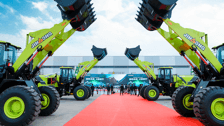

China’s wheel loader market is undergoing a historic transformation. In the first four months of 2026 alone, 27,088 units were sold domestically — and for the first time, electric loaders outpaced diesel, claiming 54.8% of sales [Source: CCMA 2026 Jan-Apr Production & Sales Report].
For international buyers, this shift creates both opportunity and confusion. Which Chinese wheel loader brands deliver real value in 2026? Which ones are built for export markets? And how do you avoid paying a 40-60% brand premium for a machine that comes off the same production line?
This guide ranks the top Chinese wheel loader manufacturers by market share, export performance, and real-world buyer feedback — and shows you how to source smart.
Top Chinese Wheel Loader Brands 2026 — The Ranking
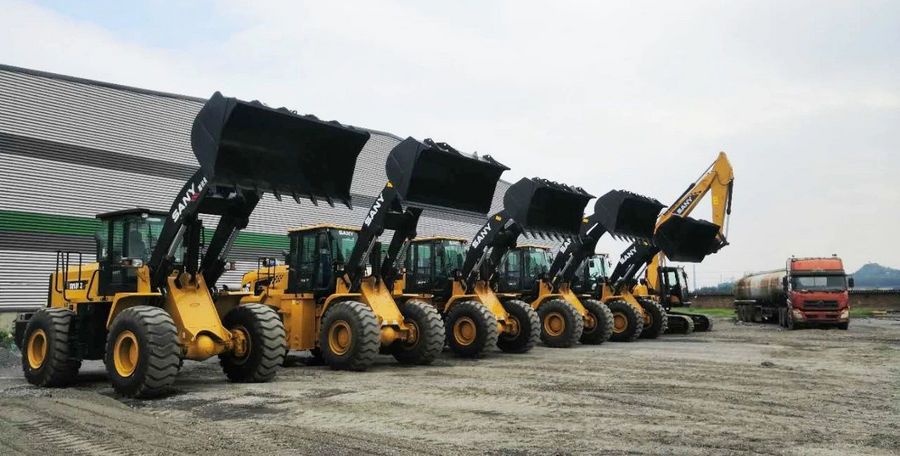
The following ranking is based on 2025-2026 domestic sales data (CCMA), export volume (China Customs), and KHL Yellow Table positioning. Market share percentages are weighted averages across multiple sources.
| Rank | Brand | Market Share (2025-26E) | Key Model | Best For |
|---|---|---|---|---|
| 1 | SDLG (Shandong Lingong) | ~18% | L956F | Volume buyers, global dealer network (Volvo-backed) |
| 2 | Liugong | ~17% | CLG856H | Heavy-duty, proven reliability |
| 3 | XCMG | ~15% | LW500FV | Large-scale projects, government contracts |
| 4 | Lonking | ~12% | LG855N | Cost-effective, good parts availability |
| 5 | SANY | ~10% | SW955K | Fast-growing brand, strong R&D |
| 6 | China Sinotruk (Howo) | ~5% | HW50 | Integrated with truck fleets |
| 7 | XGMA (Xiamen XGMA) | ~4% | XG955N | Budget-friendly |
| 8 | Jingong | ~3% | JGM857E (Electric) | Electric-first, factory-direct pricing |
| 9 | Others | ~16% | — | — |
Note: Electric penetration varies dramatically by brand. Liugong reported 60% of its loader sales were electric in Q1 2026 [Source: Liugong 2026 Q1 earnings call]. SANY and XCMG are also accelerating their electric lines. Jingong, as a smaller manufacturer, sells over 80% electric in its loader lineup.
Behind the Rankings: The Chinese Manufacturing Advantage
Take Liugong, ranked #2 with 17% market share. The CLG856H is a reliable, well-built machine backed by decades of loader manufacturing experience. But Liugong’s overhead includes a global dealer network, multi-brand R&D centers, and publicly traded company administration — all costs passed to the buyer.
What many international buyers don’t realize is that China’s wheel loader supply chain is deeply interconnected. Top brands and mid-tier manufacturers source from the same steel mills (Baowu Steel), the same engine suppliers (Weichai, Yuchai), and the same axle/transmission manufacturers. The production quality gap between a top-3 brand and a well-run mid-tier factory is often smaller than the price gap.
Jingong is a prime example. Founded in 1999 and based in Fujian province — the same industrial region that supplies components to many top loader brands — Jingong produces wheel loaders on the same ISO-certified production lines, using the same Weichai and Yuchai engines, the same German Rexroth hydraulic components, and the same ZF-style transmissions found in loaders costing 40-60% more.
The difference? No billion-dollar marketing budget. No 300-person dealer network to support. No NYSE listing fees. You pay for the machine and the steel — not the brand name.
Three Buyer Profiles — Which One Are You?
Scenario 1: The “Brand First” Buyer
You’re a large contractor with operations in multiple countries. You need a global service network, brand recognition for tenders, and financing through international channels. Go with SDLG (Volvo network) or Liugong (widest global dealer coverage). You’ll pay a premium but get the support infrastructure.
Scenario 2: The “Value & Reliability” Buyer
You have a specific job site, you know your application (quarry, construction, material handling), and you want a strong machine without overspending. Lonking or Jingong deliver proven reliability at 30-40% less than Tier 1 brands. You’ll handle maintenance locally, but the machine itself will perform the same work.
Scenario 3: The “Factory Direct” Buyer
You’re an experienced equipment buyer who understands that China’s manufacturing ecosystem produces excellent machines at factory prices — if you know where to look. Jingong’s factory-direct model eliminates the dealer margin entirely. You deal directly with the manufacturer, customize your machine to your exact specs, and pay 40-60% below brand retail for the same underlying quality.

Spec Comparison: Jingong vs. A Top-3 Brand
Let’s put the numbers side by side. We’ll compare Jingong’s best-selling 5-ton diesel-electric combo against one of China’s most popular loader models:
| Spec | Liugong CLG856H (Diesel, 5-ton) | Jingong JGM758 (Diesel, 5-ton) | Jingong JGM857E (Electric, 5-ton) |
|---|---|---|---|
| Bucket Capacity | 3.0 m³ | 3.0 m³ | 3.0 m³ |
| Engine/Motor Power | 168 kW (Weichai) | 162 kW (Weichai) | 220 kW electric motor |
| Operating Weight | 17,200 kg | 16,800 kg | 17,500 kg |
| Breakout Force | 175 kN | 170 kN | 180 kN |
| Fuel/Energy Cost (8hr shift) | $150-200 diesel | $150-200 diesel | $30-50 electricity |
| Annual Maintenance | $5,000-8,000 | $4,500-7,000 | $2,500-4,000 |
| FOB Price (Qingdao) | $85,000-95,000 | $52,000-62,000 | $58,000-70,000 |
| Warranty | 12 months | 12 months | 12 months + 24 mo on battery |
| Engine/Drive Train | Weichai WP10 | Weichai WP10 | BYD/Li-ion battery + permanent magnet motor |
The takeaway: Same Weichai engine, same drivetrain components, comparable performance specs — 38-40% lower FOB price. The Jingong JGM857E electric model not only costs less upfront but saves an additional $35,000-40,000 per year in energy and maintenance.
How Electric Is Reshaping the Chinese Wheel Loader Market
If you haven’t looked at Chinese wheel loaders in the last two years, you’d be surprised. The electric shift isn’t coming — it’s already here.
54.8% of all new wheel loaders sold in China in Jan-Apr 2026 were electric. That’s not a pilot program or a niche application. It’s the mainstream now [Source: CCMA 2026 Jan-Apr Report].
Why the rapid shift? Three factors:
- Government policy: Municipalities across China now mandate electric equipment for public projects. Diesel loaders are effectively locked out of urban construction sites.
- Total cost of ownership: Electric loaders save $30,000-40,000/year per machine in fuel and maintenance. At Chinese fuel prices, a diesel 5-tonner burns through $45,000-60,000 in diesel annually. Electric cuts that to $8,000-15,000.
- Reliability: First-generation electric loaders (2020-2023) had teething problems. Second-generation machines from 2024 onward — including the JGM857E — have proven track records with 4,000+ cycle batteries and IP67-rated drivetrains.
For export buyers, this means you’re not buying experimental technology. You’re buying a second-generation product that’s already been proven across thousands of units in China’s toughest job sites — steel mills, tunnels, mines, and ports.
Frequently Asked Questions
Are Chinese wheel loaders reliable enough for export markets?
Yes — when sourced from established manufacturers. Brands like SDLG, Liugong, Lonking, and Jingong have been exporting for decades. The key is choosing the right specification for your local conditions. We export loaders to over 20 countries across the Middle East, Southeast Asia, Africa, and South America. Our standard export configuration includes tropical cooling (for 45°C+ ambient), heavy-duty air filtration (for dusty sites), and marine-grade wiring (for coastal/humidity environments).
What’s the difference between buying from a top brand vs. factory direct?
Top brands (SDLG, Liugong, XCMG) offer global dealer networks, financing, and brand recognition for large tenders. Factory-direct brands (Jingong, smaller independent manufacturers) offer 30-50% lower pricing, direct customization, and shorter communication lines. The machine quality gap has narrowed significantly — in many cases, the components (engine, axles, hydraulics) are identical. You’re paying for the brand infrastructure, not necessarily better steel.
How long does shipping take from China to my country?
Sea freight from Chinese ports (Qingdao, Shanghai, Xiamen): Middle East 15-20 days, Southeast Asia 7-10 days, South America 25-35 days, Africa 20-35 days. We handle all export documentation (Bill of Lading, CO, Form E/FTA if applicable). Container loading is available for smaller machines (loaders under 8 tons can be containerized). Larger machines ship via Ro-Ro or flat rack.
What warranty do you offer on wheel loaders?
Standard warranty: 12 months on the complete machine, 24 months on the battery pack (for electric models). Warranty covers manufacturing defects. Non-warranty items: wear parts (tires, bucket teeth, cutting edges, belts), damage from improper operation or unauthorized modifications.
Can I customize the machine before shipping?
Yes. Common customizations we do: bucket size/type changes (spade nose, coal bucket, rock bucket), air conditioner for hot climates, additional counterweight, special paint/logo, cabin with ROPS/FOPS, rear camera, and quick coupler installation. Customization typically adds 5-15 working days to lead time.
What spare parts should I order with the machine?
We recommend ordering a basic spare kit with your first machine: 1 set of filters (oil, fuel, air, hydraulic), 2-3 belts, a set of seals, and basic electrical spares (relays, fuses, sensors). For electric models, no engine-related spares are needed — stock extra hydraulic hoses and electrical contactors instead. Parts availability is excellent; we ship from China within 24 hours for common items.
Do you provide after-sales support for international customers?
We offer remote video diagnosis support — you send us a video of the issue, and our engineers guide you through the fix in real time. Critical parts can be shipped from China within 24 hours. We do not have overseas service teams or local repair partners. For electric models, any competent electric motor technician can handle the drive system; the chassis, hydraulics, and drivetrain are identical to diesel machines that local mechanics already maintain.
Is now a good time to buy an electric wheel loader from China?
The technology has matured rapidly. 2026 is arguably the best time: battery prices have dropped 40% since 2022, second-generation electric drivetrains (with proven field data) are standard, and Chinese manufacturers are aggressively competing on export pricing. Buyers who wait risk missing the current low prices — as global demand for Chinese electric loaders rises, manufacturers may prioritize domestic delivery over export discounts.
Can I visit the factory before ordering?
Absolutely. Our manufacturing facility is in Fujian province, approximately 1 hour from Xiamen Port. We welcome factory visits — just schedule in advance and we’ll arrange pickup and a full tour of the production line, test area, and warehouse. Most buyers who visit say: “The factory is bigger than we expected.”
Ready to find the right wheel loader for your site? Contact us with your application details (material type, daily hours, bucket preference), and we’ll recommend the best configuration within your budget.
Data sources: CCMA 2026 Jan-Apr Production & Sales Report, KHL Yellow Table 2025, China General Administration of Customs 2025 export data, manufacturer quarterly reports.
6 thoughts on “Top Chinese Wheel Loader Brands 2026: Complete Ranking and Buyer Guide”